Practice · Step 6
Training, step by step
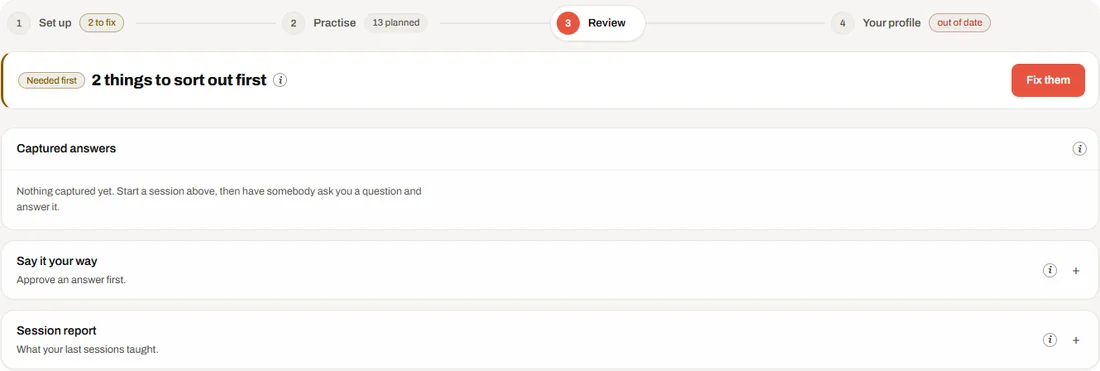
Training is for before the interview. You answer out loud, JBWhisper listens, and over time it learns which subjects you have covered, how well, and how you speak. It never writes an answer for you here.
The four steps
- Set upMicrophone, level, speech input, language, candidate voice and storage — each marked ready or with what to fix.
- PracticeChoose a mode, start, answer out loud, review. Tonight's plan suggests what to practice, for example 13 questions across 4 subjects, about 8 minutes.
- ReviewCaptured answers, “Say it your way” to reword an answer you approve, and a session report of what the last sessions taught.
- Your profileThe subjects still to train and the style check on how you have been speaking.
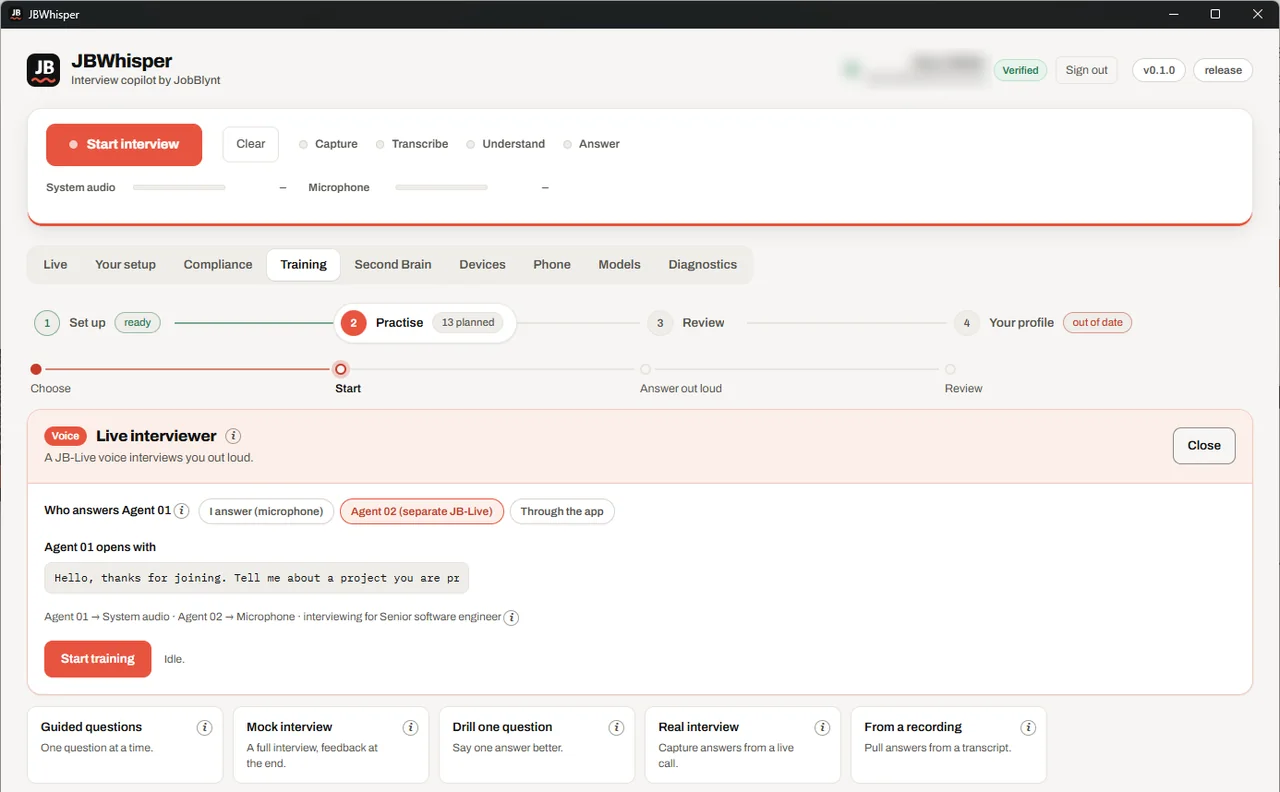
The practice modes
| Mode | What happens |
|---|---|
| Live interviewer | A JB-Live voice interviews you out loud — or Agent 02 answers it (next page) |
| Guided questions | One question at a time |
| Mock interview | A full interview, with feedback at the end |
| Drill one question | Say one answer better, again and again |
| Real interview | Capture your answers from a live call |
| From a recording | Pull your answers from a transcript |
i
No question bank
Questions are written for you by a model from your role, the subject and what you have already covered. At most one question in five is one you have answered before.
Reviewing and your profile
Every captured answer can be kept as evidence, as a sample of how you speak, both or neither. Reading and paraphrase exercises teach JBWhisper your voice but are never used as facts about you.
- Readiness per subject multiplies coverage, quality, consistency, confidence and recency, so one strong old answer does not count as ready
- The style check compares recent answers with your stored style and offers to learn it again when they drift